![[pdf]](icons/pdf.png)
|
|
|
|
| Adaptive multiple subtraction using regularized nonstationary regression | |
|
|
|---|
|
lpf
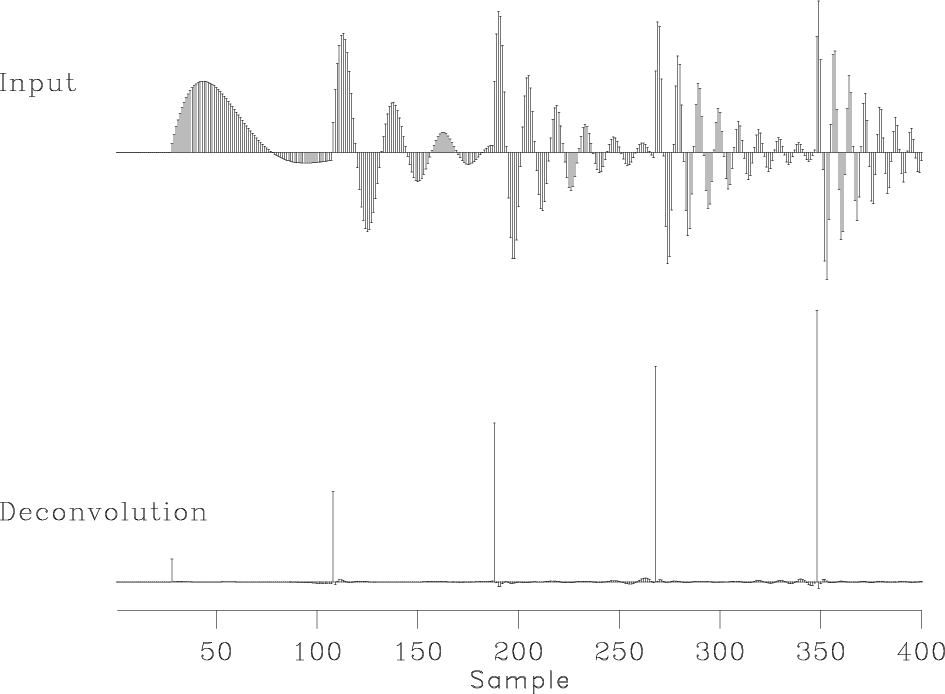
Figure 8. Benchmark test of nonstationary deconvolution from Claerbout (2008). Top: input signal, bottom: deconvolved signal using nonstationary regularized regression. |
![[scons]](icons/configure.png)
|
Figure 8 shows an application of regularized nonstationary
regression to a benchmark deconvolution test from Claerbout (2008). The
input signal is a synthetic trace that contains events with variable
frequencies. A prediction-error filter is estimated by setting  ,
,
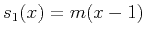 and
and 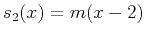 . I use triangle smoothing with a
5-sample radius as the shaping operator
. I use triangle smoothing with a
5-sample radius as the shaping operator  . The deconvolved
signal (bottom plot in Figure 8) shows the nonstationary
reverberations correctly deconvolved.
. The deconvolved
signal (bottom plot in Figure 8) shows the nonstationary
reverberations correctly deconvolved.
|
|---|
|
freq
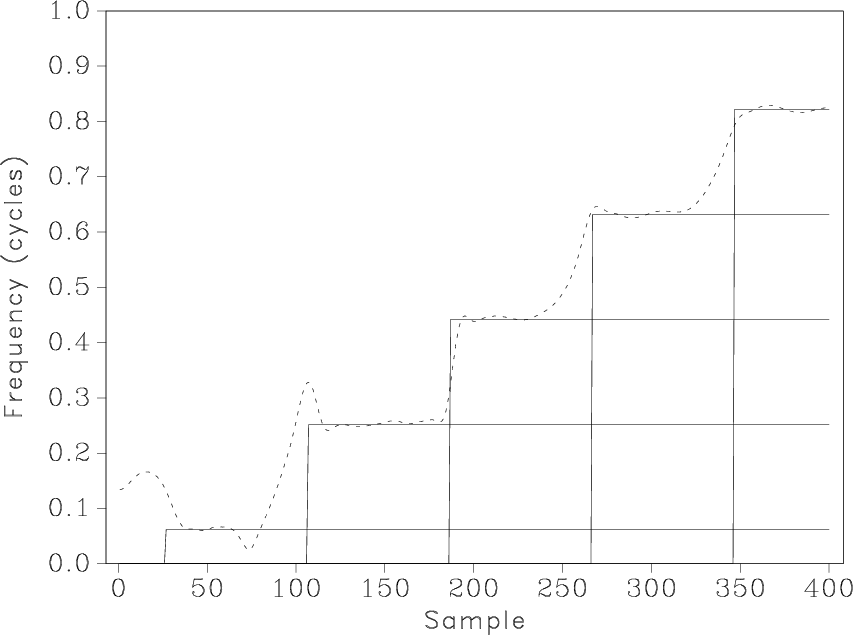
Figure 9. Frequency of different components in the input synthetic signal from Figure 8 (solid line) and the local frequency estimate from non-stationary deconvolution (dashed line). |
|
|
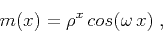
A three-point prediction-error filter  can predict an
attenuating sinusoidal signal
can predict an
attenuating sinusoidal signal
 is frequency, and
  is the exponent factor,
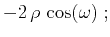
provided that the filter coefficients are defined as
is the exponent factor,
provided that the filter coefficients are defined as
 |
 |
||
![$\displaystyle \rho^x\,\left[\cos(\omega\,x)-2\,\cos(\omega)\,\cos(\omega\,x-\omega)+\cos(\omega\,x-2\,\omega)\right]$](img52.png) |
|
 |
(11) |
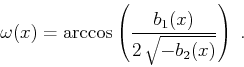
According to equations 9-10, one can get an
estimate of the local frequency  from the non-stationary
coefficients
from the non-stationary
coefficients
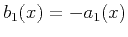 and
and
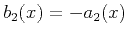 as follows:
|
|
|
|
| Adaptive multiple subtraction using regularized nonstationary regression | |
|